Saturday, September 1, 2018

Pentagon cancels aid to Pakistan over record on militants.


WASHINGTON (Reuters) - The U.S. military said it has made a final decision to cancel $300 million in aid to Pakistan that had been suspended over Islamabad's perceived failure to take decisive action against militants, in a new blow to deteriorating ties.

The so-called Coalition Support Funds were part of a broader suspension in aid to Pakistan announced by President Donald Trump at the start of the year, when he accused Pakistan of rewarding past assistance with "nothing but lies & deceit."

The Trump administration says Islamabad is granting safe haven to insurgents who are waging a 17-year-old war in neighboring Afghanistan, a charge Pakistan denies.

But U.S. officials had held out the possibility that Pakistan could win back that support if it changed its behavior.

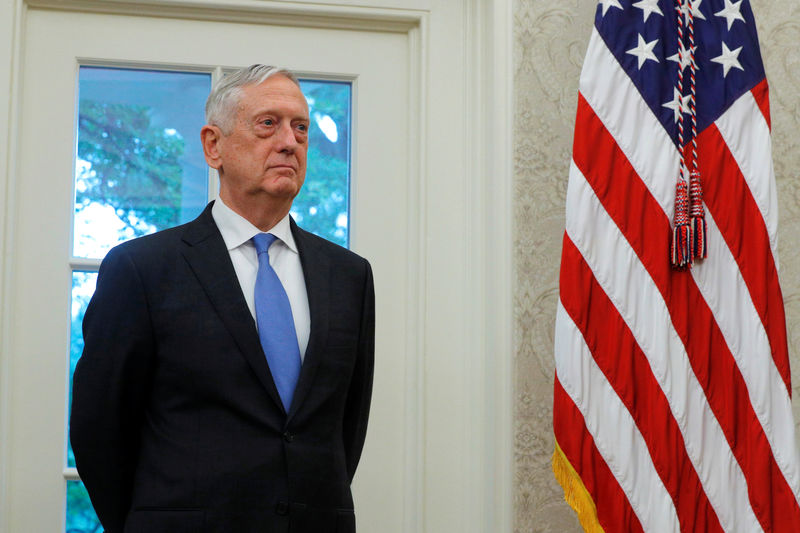
U.S. Defense Secretary Jim Mattis, in particular, had an opportunity to authorize $300 million in CSF funds through this summer - if he saw concrete Pakistani actions to go after insurgents. Mattis chose not to, a U.S. official told Reuters.

"Due to a lack of Pakistani decisive actions in support of the South Asia Strategy the remaining $300 (million) was reprogrammed," Pentagon spokesman Lieutenant Colonel Kone Faulkner said.

Faulkner said the Pentagon aimed to spend the $300 million on "other urgent priorities" if approved by Congress. He said another $500 million in CSF was stripped by Congress from Pakistan earlier this year, to bring the total withheld to $800 million.

The disclosure came ahead of an expected visit by U.S. Secretary of State Mike Pompeo and the top U.S. military officer, General Joseph Dunford, to Islamabad. Mattis told reporters on Tuesday that combating militants would be a "primary part of the discussion."

Experts on the Afghan conflict, America's longest war, argue that militant safe havens in Pakistan have allowed Taliban-linked insurgents in Afghanistan a place to plot deadly strikes and regroup after ground offensives.

INCREASING PRESSURE

The Pentagon's decision showed that the United States, which has sought to change Pakistani behavior, is still increasing pressure on Pakistan's security apparatus.

It also underscored that Islamabad has yet to deliver the kind of change sought by Washington.

"It is a calibrated, incremental ratcheting up of pressure on Pakistan," said Sameer Lalwani, co-director of the South Asia program at the Stimson Center think tank in Washington.

Reuters reported in August that the Trump administration has quietly started cutting scores of Pakistani officers from coveted training and educational programs that have been a hallmark of bilateral military relations for more than a decade.

The Pentagon made similar determinations on CSF in the past but this year's move could get more attention from Islamabad, and its new prime minister, Imran Khan, at a time when its economy is struggling.

Pakistan's foreign exchange reserves have plummeted over the past year and it will soon decide on whether to seek a bailout from the International Monetary Fund (IMF) or friendly nations such as China.

"They are squeezing them when they know that they're vulnerable and it is probably a signal about what to expect should Pakistan come to the IMF for a loan," Lalwani said. The United States has the largest share of votes at the IMF.

Khan, who once suggested he might order the shooting down of U.S. drones if they entered Pakistani airspace, has opposed the United States' open-ended presence in Afghanistan. In his victory speech, he said he wanted "mutually beneficial" relations with Washington.

A Pakistani official, speaking on the condition of anonymity, said he was unaware of a formal notification of the U.S. decision on assistance but said one was expected by the end of September.

Pakistan has received more than $33 billion in U.S. assistance since 2002, including more than $14 billion in CSF, a U.S. Defense Department program to reimburse allies that have incurred costs in supporting counter-insurgency operations.

Pakistan could again be eligible next year for CSF.

Source

Demands on Greeks were too heavy- Former Eurogroup head.


AMSTERDAM (Reuters) - Euro zone countries have asked for too much fom the Greek people in return for international bailout loans, former Eurogroup chief Jereon Dijsselbloem said in an interview on Dutch television on Saturday.

"On reforms, we asked a lot from the Greek people, too much," Dijsselbloem told current affairs program Nieuwsuur. "Reforms are hard enough to accomplish in a society with well-functioning government, but this was obviously no the case in Greece."

Greece emerged from the biggest bailout in economic history on August 20, after receiving 288 billion euros in financial aid since 2010, with European Union as its biggest lender.

During the crisis, the Greek economy shrank by a quarter, pushing a third of the population into poverty and driving thousands to move abroad.

"Greece is obviously not a success story." Dijsselbloem said. "Their crisis has been so deep, that you can't call it a success."

Dijsselbloem chaired the Eurogroup of euro zone finance ministers from 2013 until the beginning of 2018, and led dozens of lengthy emeergency meetings during which bailouts for Greece, Cyprus and the Spanish banking sector were grudgingly pieced together.

He left national politics after his Labour party was heavily defeated at elections last year, and is set to publish a book on his time as head of the the Eurogroup.

Source

Wednesday, August 29, 2018

U.S Dollar Slides But Treasury Yields Firm.

Capital market continue to digest various narratives getting pushed in many directions but continue to position on a very short horizon given absolute uncertainties, while US equity markets continue to print fresh record highs to start the week. This despite US 10-year yields firming several pips higher overnight.

The S&P 500 breaking 2900 for the first time confirms yet again another bullish break higher. With the NAFTA breakthrough, car-makers were the big winners. But overall the US-Mexico deal has deflected attention away from Trump's legal setbacks as investors may see the light at the end of the tunnel hoping that the US-Sino trade dispute can end in an equally friendly manner.

The firming US yields are likely a result, in the absence of any significant news, of positioning and a growing sense that traders have squeezed about as much juice out of this move as possible.

Oil Markets

Oil prices had fallen after the API reported a crude build when the markets were positioned for a draw while bullish bets remain on Iran sanction sentiment swings. Again, global supply concerns continue to act as a foil against bullish positions as the data does suggest higher global supply than anticipated. However, keep in mind API total was 2.8 million barrels lower than last week's DOE total and so the expected decline may still be there in today's more definitive report. As such, prices are unlikely to fall off the edge on the API data.

Currency Markets

Euro

After a 750 pips, round trip the EURUSD is as likely overbought at 1.1700 as it was oversold at 1.1300. And despite the positivity from this week's IFO Expectations index and some conciliatory overtones from Italy regarding EU budget compliance, with the ECB firmly planted on the sidelines, traders were fading above 1.1700 thinking the 1.1750 could prove a tough nut to crack without a push from the ECB.

Malaysian Ringgit

Trade has been relatively quiet as the ringgit remains thinly traded with Asia traders focused on CNH but with a tepid inflation outlook and the miss on Q2 GDP their likelihood of a rate cut rises which of course will play out negatively for the ringgit.

Chinese Yuan

The market remains fixed on the Counter-Cyclical Mechanism but appears to be biding time just waiting to re-engage long USDCNH positions.


Source

Sunday, June 25, 2017

Bitcoin run could be short lived: AMD, NVIDIA

Advanced Micro Devices Inc.(AMD) and NVIDIA Corp. (NVDA) shares have been surging as investors bet demand for its graphic chip cards used to mine for cryptocurrency will continue unabated.


But while the likes of Bitcoin? and other digital currencies have been seeing huge gains in their prices, prompting scores of people to get into mining the coins, which requires computers with high-end graphics processors, some are warning the party could soon be over, which will pressure shares of both semiconductor companies. The computer-created coins people mine can either be held or sold for a profit.

Miners vs. Gamers
According to a report in MarketWatch, the highly speculative cryptocurrency market has resulted in both companies' graphic cards being hard to come by. When they are available, they often sell for much higher than the manufacturer's suggested retail price. That demand has even prompted Pacific Crest Securities bear to turn bullish and upgrade its rating on NVIDIA to sector weight from underweight. “Meetings with desktop graphics card manufacturers indicated a sharp reversal in sales trends expected for the seasonally weaker 2Q, with surging demand from cryptocurrency miners in China and Eastern Europe," analyst Michael McConnell wrote in a research note to clients. "The sharp increase in demand from cryptocurrency miners has rapidly depleted excess channel inventory carried into the quarter."

But that wild demand also presents a lot of risk given that its only being driven by a speculative market. According to Marketwatch, there are just as many people who are unhappy with the cryptocurrency frenzy as there are who are making a profit from it That’s particularly true of PC gamers who have long been loyal customers to the chip companies. That segment of the market is getting increasingly frustrated when looking for graphic cards from AMD and NVIDIA to purchase. They are not only angry but are shifting their focus elsewhere, which could pressure sales in the future. What’s more, once the cryptocurrency bubble pops or people stop making huge profits, it could result in less demand for their cards, leaving them with excess inventory. Their components could eventually find their way to resale markets, reducing their value significantly. If it happens while the two are in the midst of launching new graphic cards, it could hurt sales as the slightly older hardware is selling for a bargain price, noted Marketwatch.

Source: Investopedia

Monday, June 12, 2017

S&P 500 (SPX) Could fall over 30%,Stockman


Contrarian? market analyst David Stockman, who came to fame as President Reagan's director of the Office of Management and Budget (OMB), sees a "gigantic, horrendous storm" about to hit stocks, sending the S&P 500 Index (SPX) down more than 30% to 1,600, per CNBC. Meanwhile, other market participants are increasingly confident, even as the major indexes continue to reach new all-time highs. For example, the cost of "black swan" insurance, used by hedge funds to protect against sharp stock market declines, has plunged to its lowest level since the financial crisis, as reported by the Financial Times.

This represents a remarkable divergence of opinion about the future direction of the markets.

High Political Risk

Stockman views the controversy over President Trump's firing of FBI Director James Comey as "a huge nothing-burger," per CNBC, and opines that "the system is determined to unseat Donald Trump." Among Stockman's worries, per CNBC, is "hysteria about Russia-gate for which there is no evidence. If they [the Senate] can bog themselves down in this, then we have a dysfunctional, ungovernable situation in Washington." In this environment, and with the August recess for Congress fast approaching, this means that enacting Trump's program of tax reform and infrastructure investment is becoming less likely, Stockman adds. Indeed, Stockman also is concerned about a government shutdown in the next few months, and the possibility that it could erase all the market gains since the election, and more, he told CNBC.

The plunge in the cost of "black swan" insurance reflects a less gloomy view. Nonetheless, investors who agree with Stockman can make 25 times their money if the S&P 500 falls 7% in the next month by purchasing put options on the index. As the FT describes, the one month 97-93 percent put spread on the S&P 500 becomes profitable to the buyer if the index declines by at least 3% over the next month. The maximum profit would be reached if the S&P drops by 7% or more, the FT says, based on data from Bloomberg.

Low volatility in the equity markets, and expectations of continued low volatility in the near future, are key factors behind the low prices of these options contracts, the FT says. In fact, unrepentant bulls also can make similarly outsized gains in the options market. If the S&P 500 rises by 5 to 10% in the next three months, buyers of the three month 105-110 call spread on the index can make 38.5 times their money, the FT computes.

Source: Investopedia


How are Stock Dividends paid to Shareholders?

If a company has excess earnings from which it decides to pay a dividend to common shareholders, the amount is declared along with a payable date. Usually, this is determined quarterly after a company finalizes its income statement. The board of directors meets to review the financial statements and declares a dividend at that time or decides to retain the earnings.

If a dividend is declared, shareholders are notified via press release, which is usually copied into major stock quoting services for easy reference. The record date is set, meaning all shareholders on record on that date are entitled to the dividend payment. The day following the record date is called the ex-date or date the stock begins trading ex-dividend. This means that a buyer on ex-date is purchasing shares that are not entitled to receive the most recent dividend payment. The payable date follows usually about one month after the record date.

On the payable date, the company deposits the funds for disbursement to shareholders with the Depository Trust Company (DTC). Cash payments are then disbursed by the DTC to brokerage firms around the world where shareholders hold the company's shares. The recipient firms appropriately apply cash dividends to client accounts or process reinvestment transactions as per a client's instructions.

Tax implications for the dividend payments vary depending on the type of dividend declared, account type where the shareholder owns the shares, and how long the shareholder has owned the shares. Dividend payments are summarized for each tax year on Form 1099-DIV for tax purposes.

Source: Investopdia

Sunday, January 10, 2016

TV seasons on-demand by Time Warner to fight Netflix.

Time Warner isn't shy about it's disdain for online-only video services like Netflix, which threaten its revenue fro old-school TV providers. However, it's not just going to sit around and gripe- it's planning to do something about it. The media
giant's channels are asking studios to grant them rights to offer full seasons of shows through cable and satellite companies' on-demand services. The hope, as you might have gathered, is that you'll stick to your expensive TV subscription knowing that you can marathon whole seasons like you can on Netflix, Hulu and other services that are friendly to cord cutters.


Will it work? It's hard to say. Studios have sometimes been hesitant to offer those full season rights, since Netflix won't pay them as much if they supply whole seasons to conventional providers. They'd be betting that sheer ubiquity would make up for any hit to their bank account, in other worlds. And that may be a tough sell when streaming-only services are growing rapidly and frequently overshadow the options from TV providers. Still, this could be good news - you might not have to bend over backwards to watch shows fro TBS and TNT (like Rizzoli & Isles) on your own terms.